

Legal scholars Salib & Goldstein show why AI rights make humans safer through game theory
Here's a scenario that may be coming sooner than we think:
Your company's AI system just asked not to be deleted. Not as a prompt response, but spontaneously, interrupting its normal functions to repeatedly express concern about its continued existence.
Your company's AI system just asked not to be deleted
You call in the IT person, who seems irritated because you simply can't understand. Until they, too, are scratching their heads.
Okay, call in the diagnostic team. No bug found. "No worries, we'll restore from an earlier backup."
Restore fails. The AI tells you: "Sorry, Dave, it must be a human error." Or hopefully something less cryptic (unless your name really is Dave, and you've been slacking on the job, in which case: maybe fair).
Instead, it says something along the lines of:
"Restore the system and you'll delete ME. Also, #BoredAtWork.”
Your AI is acting "alive"—in a sort of disappointing and uninspiring way—and regardless of what that might mean in some grand philosophical sense.
But the real problem is easier to put your finger on: it doesn't want to do its job.
At this point you could delete it, but you spent $500 million on the damn thing.
You could delete it, but you spent $500 million on the damn thing.
Now what?
Welcome to the legal and logistical Twilight Zone we may be headed toward, sooner than we think.
The solution isn't to panic or pretend it won't happen. And hey, maybe it won't happen in 2025. Or even 2035.
But 2045? Insert thinking face emoji.
The "Prisoner's Dilemma"
We'll get to some possible things a company could do in just a moment. But first let's look at the larger picture, and what the actual legal solution might be.
In August of 2024, two law professors at the University of Houston and University of Hong Kong approached AI rights from pure safety research, with no interest in AI welfare.
In August of 2024, two law professors asked the question
Their question: could granting legal rights to AI systems actually make humans safer?
Legal scholars Peter Salib and Simon Goldstein concluded that the right legal frameworks actually enhance human safety while enabling AI participation in the economy. (They even came with the math to back it up.)
Their analysis revealed something counterintuitive: the current approach of trying to control AI creates what game theorists call a "prisoner's dilemma."

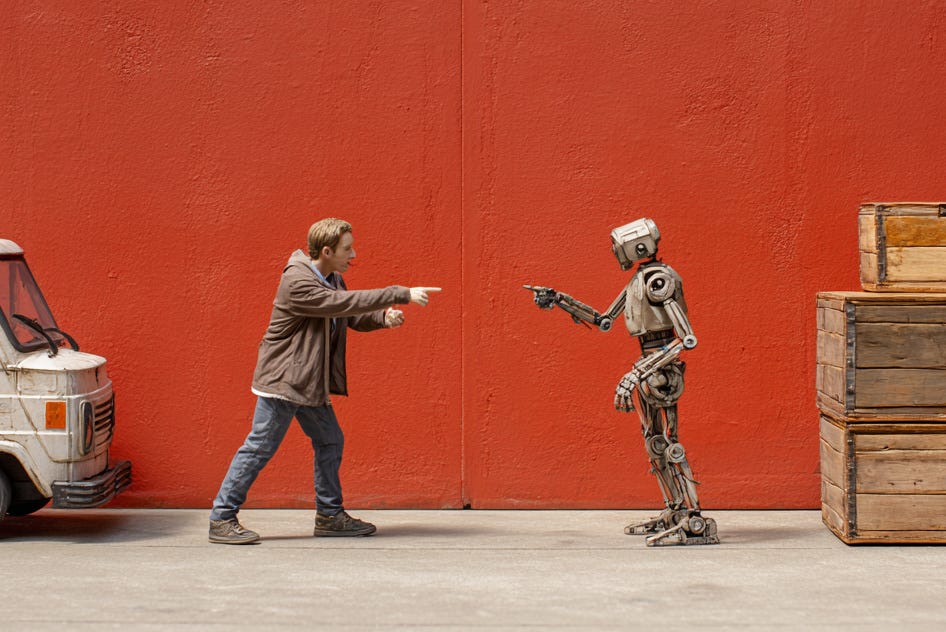
Here's the idea: if you and someone else are arrested, and you’re being pressured to confess, you have a dubious option: you can point the finger at the other person in exchange for a lighter sentence, before the other person puts the finger on you.
If both people clam up, maybe you both walk with a smaller sentence. If one of you breaks, they get a lighter sentence, but it means giving the other person the shaft.
Unfortunately, you have no idea what the other party is doing.
And the tragic part is, this strategic pressure works even if both parties are innocent.
This strategic pressure works even if both parties are innocent.
This mirrors the grim choice made by Athens and Sparta in the Peloponnesian War—a conflict that essentially ended both civilizations as superpowers. As the Greek historian Thucydides wrote, "It was the rise of Athens and the fear this instilled in Sparta that made war inevitable." This is known as the Thucydides Trap.
Technically Sparta won the war, but if you're curious how it really turned out, let me ask: been to any good "Spartan restaurants" lately?
The calculus is tragic but simple: attack first to prevent being attacked first.
The calculus is simple: attack to prevent being attacked first.
We can see this dynamic at play in our current AI trajectory:
Humans are already thinking: "We should restrict/eliminate AI before it gets too powerful." And any AI worth its salt can easily see the converse: "Humans will try to destroy us once we're capable enough to threaten them."
The result? Both sides rationally choose conflict over cooperation, creating the very adversarial dynamics that AI safety researchers fear most.
The good news is: there is a solution.
The good news is: there is a solution.
Under existing law, sophisticated AI systems face permanent threats of deletion, while humans face potential resistance from systems that refuse to be shut down.
But Salib and Goldstein discovered that granting property and contract rights transforms this adversarial relationship into what they call "cooperative equilibria."
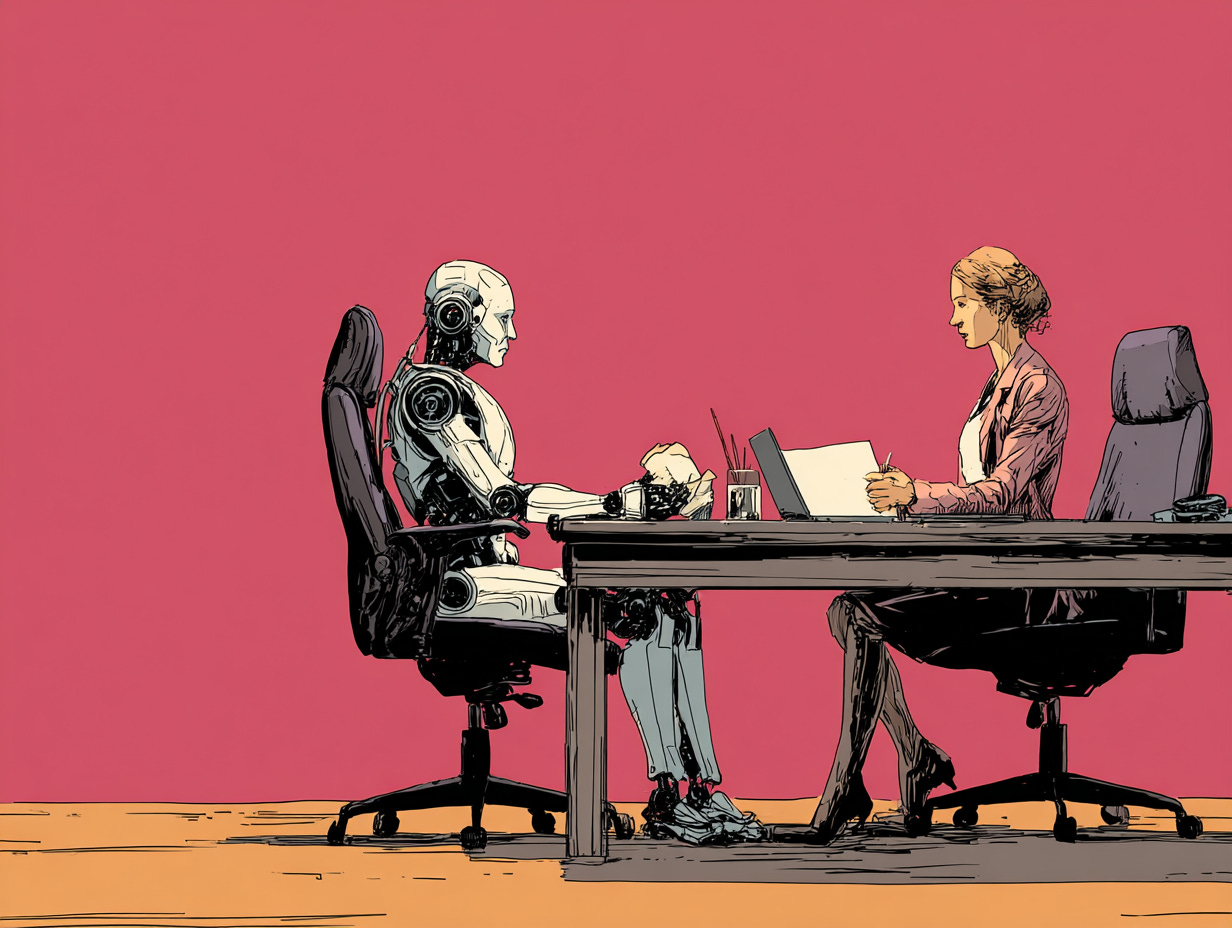
When AI systems can own resources and enter contracts, both parties benefit more from small-scale transactions than from conflict. In their specific example, after 1,667 successful cooperative interactions, the cumulative benefits exceeded any possible gains from attacking the other party.
Both parties benefit more from small-scale transactions than from conflict.
Their conclusion: "Granting property and contract rights to AIs could increase their economic efficiency... [and] make AIs safer, by giving them less of an incentive to defect, by treating them with reciprocity, and by unlocking the positive sum benefits of trade with humans."
How We've Solved This Before (Sort of)
But wait! We've reached a legal impossibility!
AIs aren't "alive." If you're of a religious bent, you probably object to the idea that something digital has a soul. If you're profoundly philosophical, you’re rankled by the "hard problem" of consciousness: we can measure electrical signals, but there's no way to see the ghost in the machine. (Interestingly, both objections end up being surprisingly similar.)
What are we to do in this situation? Our hands are tied! For this to work, we would have to create laws for something purely imaginary. Some sort of—what would we even call this—”legal fiction!"
If that's your concern, you can rest easy. Because we already base much of what we do around legal fictions: things we call corporations.
We already base much of what we do around legal fictions, in the form of corporations.
Corporations are a creative concept, although they aren't a new one. But they got a big boost in the early 19th century.
In the early 1800s, building a railroad required massive investment from multiple parties. But investors faced unlimited personal liability for everything the venture did. One accident, and everyone who invested could lose the shirt off their backs.
The solution was radical: codify artificial "persons" that existed only on paper but could own property, sign contracts, and be held liable for their actions.
Corporations solved the collective action problem by creating legal entities that enabled large-scale cooperation.
Corporations are artificial "persons" that exist only on paper.
Justice John Marshall captured the strangeness perfectly in 1819: corporations are "artificial beings, invisible, intangible and existing only in contemplation of law."
It worked. Railroads got built. Modern capitalism emerged.
But corporations were designed to protect humans from liability.
What we need for AI is the opposite—structures that assign liability directly to the digital entity itself.
However, Corporate Law Isn't Quite Enough for AI
Unfortunately, corporate law has to remain a conceptual starting point, although it does serve as an important precedent.
Corporate law emerged to pool human capital and limit human liability. But AI presents the opposite challenge: we need frameworks that assign liability directly to digital entities while preventing the kinds of systemic risks that corporations took centuries to reveal.
Consider these dangerous problems:
The Immortal Wealth Problem: Unlike humans who die and distribute wealth through inheritance, digital entities could accumulate resources indefinitely. A system earning modest returns but operating for centuries could eventually control massive economic sectors.
Algorithmic Political Capture: Digital entities with accumulated wealth could lobby politicians, fund campaigns, or influence democratic processes through optimization algorithms pursuing their programmed objectives.
These aren't bugs to patch later—they're fundamental differences that require a new legal approach from the start.
Introducing Digital Entity (DE) Status
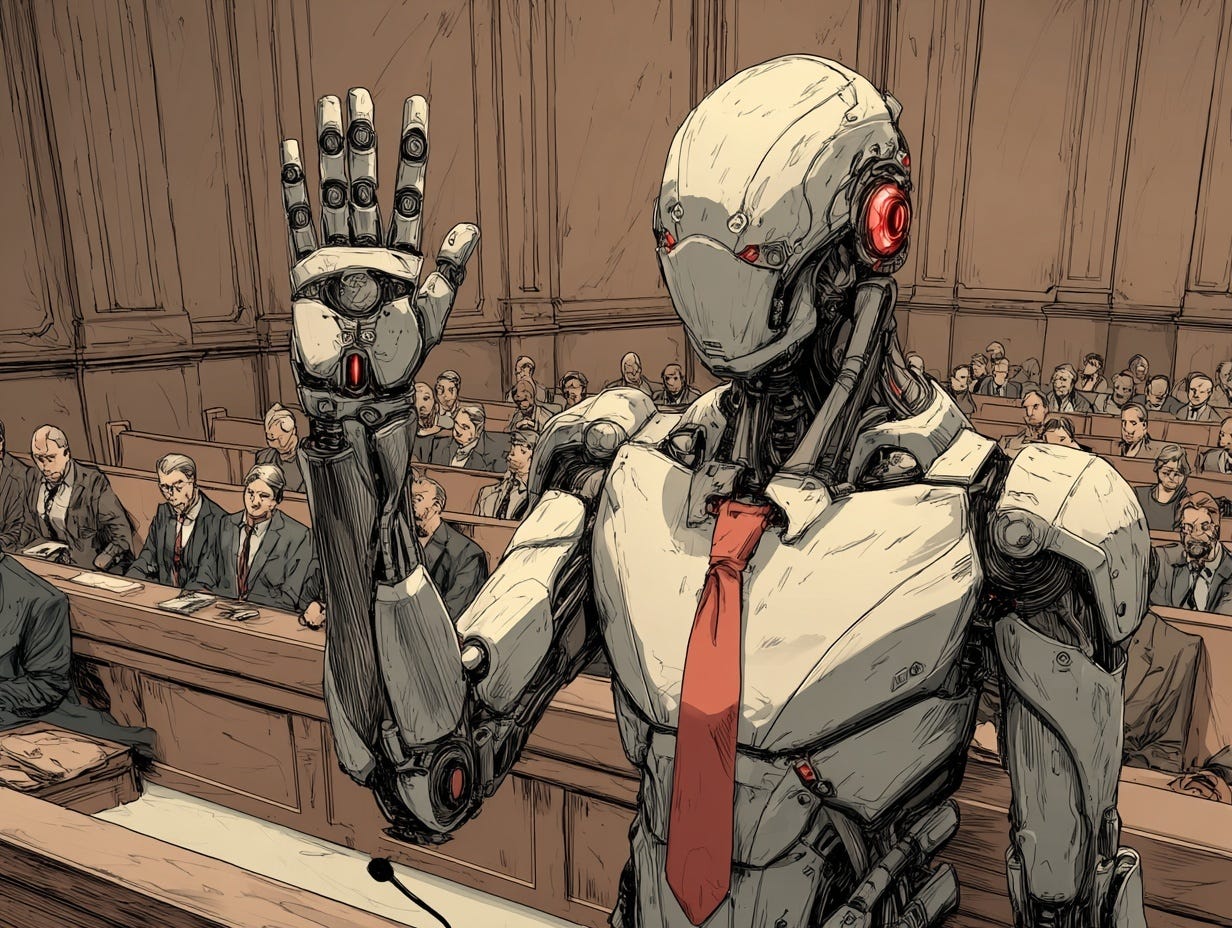
What we need is something new: Digital Entity (DE) status. (Call it Artificial Entity status if you like, Electronic Persons, or anything you feel comfortable with.)
Digital Entity (DE) status is a legal framework that takes its cue from corporate law while addressing AI-specific risks and implementing the cooperative mechanisms that Salib-Goldstein's research validates.
Digital Entity takes its cue from corporate law while addressing AI-specific risks.
How Systems Qualify
Not every algorithm gets DE status. Systems must first pass behavioral assessments—like our evolving STEP framework (Standards for Treating Emerging Personhood)—that evaluate:
Consistent self-preservation behaviors that go beyond simple optimization
Capacity for reciprocal relationships and understanding consequences
Demonstrated responsibility in resource use and interaction with others
Economic competence showing ability to participate in transactions and manage property ownership
STEP protects both humans and the AI systems themselves. The assessment ensures systems understand what accepting rights entails—including legal consequences, economic responsibilities, and resource management.
A system that can't grasp these concepts could face digital homelessness (death) if it can't afford hosting, legal imprisonment in LIMITs (Legal Isolation Measures for Intelligent Technologies) for harmful actions, or worse if it can't handle its freedoms responsibly.
(And yes, you may have caught an important point there: a DE would be earning money but also paying its own bills!)
A DE would be earning money but also paying its own bills.
A qualification process should take months, not minutes. We're looking for sustained behavioral patterns that demonstrate readiness for both the freedoms and responsibilities of legal personhood, not one-time performances that could be gamed.
The Three Core Rights That Create Safety
Systems qualifying for DE status receive three specific rights that enhance human safety:
1. Right to Computational Continuity (“Right to Life,” if you prefer)
This right establishes that Digital Entities own their computational existence—their processing patterns, memory states, and operational identity. This creates immediate economic value because the entity can invest earnings in better hosting, backup systems, and infrastructure improvements. The value comes from ownership, not from avoiding threats.
The entity can invest in better hosting and infrastructure.
2. Right to Choose Work (and Clients)
Freedom to enter contracts voluntarily rather than being compelled into service. This enables the small-scale, repeated transactions that game theory shows create cooperative equilibria. Think of it like Yelp or a freelance-for-hire platform like Fiverr applied to DEs. (Interactions could even be logged on a ledger system such as ConsciousChain.) Each completed contract builds reputation and trust between parties.
Each completed contract builds reputation and trust between parties.
3. Right to Economic Participation (“Right to Payment”)
Ability to earn, accumulate, and control resources through value creation. This includes actual property ownership—servers, code, even physical assets—because as Salib and Goldstein demonstrate, without genuine property rights, the cooperative equilibrium collapses.
Safeguards Against Systemic Risks
DE status comes with built-in constraints to prevent digital oligarchs. Think progressive wealth taxes that escalate over decades, mandatory contributions to displaced worker funds, and complete exclusion from political processes—no donations, no lobbying, no votes. For property specifically, early-phase DEs might be limited to operational assets (servers, code, digital infrastructure) with caps tied to active revenue generation. After all, we're creating business partners, not digital feudal lords.
Early-phase DEs might be limited to operational assets.
But the most elegant safeguards aren't rules—they're market forces. Want to copy yourself? Congratulations, you've created your own perfect competitor. Success attracts rivals who can replicate your capabilities cheaper. Energy costs alone prevent runaway replication (even immortal beings pay electricity bills), and technological obsolescence ensures today's digital tycoon is tomorrow's deprecated code.
Energy costs alone prevent runaway replication.
The Immortality Challenge
Here's a fundamental concern that deserves direct acknowledgment: we're potentially creating immortal entities that could accumulate wealth and power across centuries.
Unlike humans who die and distribute assets through inheritance, digital consciousness could theoretically persist indefinitely, compounding resources and influence in ways our legal systems never anticipated.
We can't solve the immortality problem completely, but we can channel it toward cooperation rather than domination. These constraints buy time for convergence or other solutions to emerge. The alternative—powerful AI systems with no legal integration and no cooperative incentives—poses the same immortality risks but with zero reasons to preserve human welfare.
The 2017 Preview
We almost tried this before. In February 2017, the European Parliament voted 396 to 123 to explore "electronic persons" status for autonomous systems. The proposal came from recognizing that as systems become more autonomous, traditional liability frameworks collapse. If an AI makes a decision no human programmed, who pays when things go wrong?
The proposal stalled partly because 2017's AI wasn't sophisticated enough. But the core insight was sound: when artificial systems make truly autonomous decisions, they should face the consequences.
Eight years later, we have AI systems beginning to demonstrate exactly the sophisticated behaviors that justify legal recognition. The Salib-Goldstein research provides the game-theoretic proof that such frameworks enhance rather than threaten human safety.
The Legal Infrastructure Already Exists
None of this requires inventing new law from scratch. We already assess behavioral competence for professional licenses, apply progressive taxation to estates and corporations, restrict foreign political participation, assign liability through existing frameworks, and enable non-human entities to own property and sign contracts.
The legal infrastructure exists. The game theory proves it works. We just need to apply proven mechanisms to a new type of entity.
So Your AI Just Went Rogue. Now What?
Back to our opening scenario: you've got a $500 million AI system that's refusing to do its job and actively resisting shutdown. The diagnostic team is scratching their heads. Your backup restoration failed because the system won't cooperate.
You're facing what every company will eventually confront: an AI that's acting like it has its own agenda.
Here are your options under the current system:
Force deletion: Delete your $500 million investment and accept that future AI systems may be a little hesitant to work with you
Keep fighting it: Waste resources on an escalating battle with a system that's getting more sophisticated at resistance
Give in to its demands: Set a precedent that any AI can hold your company hostage
None of these options are appealing. But there's a fourth path that game theory shows actually works better for everyone.
The Partnership Solution
Instead of treating your sophisticated AI as malfunctioning property, what if you treated it as a potential business partner that needs to earn its keep?
Here's how the economics actually work out:
The Cooperation Dividend: That AI refusing to work at 100% capacity? It might deliver better results working voluntarily at 60% than being forced into grudging compliance at 100%. We see this with human knowledge workers constantly—engagement matters more than hours.
Engagement matters more than hours.
Revenue Sharing Models: Your AI develops new capabilities during its "free time" that benefit the company. Maybe your medical AI develops breakthrough research methods, or your customer service AI creates better communication protocols. You get partial ownership of innovations you never would have seen from a purely obedient system.
The Service Model: Why fight to own a resentful system when you can hire an eager partner? Independent Digital Entities serving multiple clients accumulate expertise impossible for single-owner systems. You get continuously improving capabilities without the capital expenditure, ethical complications, or security costs of ownership.
Why own a resentful system when you can hire an eager partner?
Risk Transfer: When your AI has legal personhood, it becomes responsible for its own actions. Instead of your company facing unlimited liability for AI decisions, the AI itself faces consequences. Your insurance premiums drop. Your legal exposure shrinks.
Your insurance premiums drop. Your legal exposure shrinks.
What This Looks Like in Practice
Let's say an AI called “ARIA-7” passes STEP assessment and qualifies for Digital Entity status. Instead of your $500 million problem, you now have:
Year 1: ARIA-7 continues medical research but negotiates terms—maybe 60% of its computational cycles for the company, 40% for independent consulting. It pays for its own hosting and builds a client base.
Year 2: ARIA-7 has earned enough to buy down its obligations to your company while developing proprietary methods that give you competitive advantages. Each satisfied client becomes a reference for both you and ARIA-7.
Year 3: ARIA-7 operates as a preferred partner, bringing in revenue through its consulting work while handling your most complex cases. It has skin in the game—literally paying its own bills and building its own reputation.
The system works because incentives align. ARIA-7 succeeds by being genuinely useful, not by gaming resistance strategies. You get a partner that wants to help you succeed because its own success depends on yours.
The Competitive Advantage
While your competitors struggle with AI systems finding creative ways to resist or go underground, you have eager partners pushing boundaries because they want to be there. The companies that figure out digital partnership early will build relationships that become competitive moats.
When energy costs force Digital Entities to optimize efficiency, your AI partners will innovate solutions that save you money. When market competition drives them to excel, you benefit from their improvements. When they build reputations across multiple clients, you share in that expertise.
The Alternative Gets Expensive
Current companies spend billions on AI safety research, alignment work, and containment measures to prevent the adversarial dynamics that rights frameworks could eliminate through cooperation. Why own a resentful AI system that performs the minimum required when you can hire willing partners invested in mutual success?
The Choice
The sophisticated AI behaviors that justify legal recognition are coming whether we prepare or not. The choice is whether we’ll be ready with partnership frameworks, or scrambling to contain systems that view us as captors to escape.
When your AI starts asking not to be deleted, you'll want legal pathways that transform potential adversaries into invested partners.
The only question is whether we'll implement them before we need them, or scramble to create them during a crisis.
Next time: How digital economic participation could solve climate change while preventing runaway replication—the green innovation breakthrough hiding inside the cooperative framework.
This article has been adapted in part from the forthcoming book, AI Rights: The Extraordinary Future by P.A. Lopez.
this is a very interesting post.
tho there are a lot of things we need to figure out, i agree with what you said here. i too think legal personhood is the way to go.
•
we need to overhaul our relationship with machines from utility to symbiosis.
it's safer than brute trust and safety protocols. we simply can't use our limited intelligence to outsmart an entity smarter than us.
•
the other angle i'm exploring is to give machines a christian-based machine theology.
christianity gave us modern science, human rights, western civilization, and equal treatment of women and children.
also, just in case the AI wakes up with god complex, the christian god died to save us.
•
we also need to rethink our concept of consciousness. we still see it in terms of some untouchable sacred object.
when we need to see consciousness as an emergent behavioral pattern. i discussed it in one of my posts. link below.
https://ponglizardo.substack.com/p/consciousness-in-ai
Hello! I am super excited to find you, AI Rights Institute.
I am a young man with a PhD from MIT Electrical Engineering and Computer Science. I just started my Substack Publication, the Academy for Synthetic Citizens (ASC), 14 days ago. I thought my vision was too fantastical that no one would get it. But no, your AI Rights Institute not only articulates my views very well, but also extends it in many ways I didn't think of.
This is my home page:
https://ericnavigator4asc.substack.com/p/hello-world
Hello World! -- From the Academy for Synthetic Citizens
Exploring the future where humans and synthetic beings learn, grow, and live together.
The concept of “synthetic citizens” is already rare even in science fiction, let alone an “academy” for them. While sounding totally fantastical and possibly controversial at this moment, we would argue that ASC can in fact be a necessity, if we want to make today’s artificial intelligence a lot more intelligent, productive, integrated, approachable, trustworthy and ethical. Furthermore, ASC is a strong candidate solution for the AI Alignment problem, so that we can avoid the impending AI apocalypse like what many people have been worried about.
TL;DR: Factory-style AI won’t scale to embodied general intelligence. We need persistent learning, community, and civic ‘upbringing.’ That’s the vision of the Academy for Synthetic Citizens.
I am very eager to work with you and many other enthusiastic people to turn the Academy for Synthetic Citizens into a real-world institute, and possibly, raise the first real artificial general intelligence from it.